

Every generation of chipmaking introduces its own dialect of progress. In the early days, it was the language of size and scale. Later, it became one of speed and power. Now the conversation is shifting again, this time toward integration. At the center of that dialogue are two technologies that communicate seamlessly with each other: MEMS and photonics. Erik Hosler, who often reflects on how progress depends on connection, recognizes that these two disciplines no longer live at the edges of the industry.
That partnership has begun to change how engineers think about possibility. MEMS, with their ability to detect, adjust, and react, bring motion into systems that once stood still. Photonics introduces light as a fast, efficient, and beautifully precise medium of communication. Together, they move semiconductor design beyond circuitry and into choreography, where matter and energy perform in perfect rhythm.
Two Paths, One Direction
MEMS and photonics grew from different scientific traditions. MEMS came from mechanical engineering, where physical movement at microscopic scales became a form of logic. Photonics emerged from the study of light, seeking to replace electrons with photons for faster communication.
Their meeting point lies in what both seek to overcome, the limits of conventional scaling. As transistors approach their physical boundaries, MEMS and photonics open new doors. One controls the tangible, the other the intangible. Together, they redefine precision not through smaller dimensions but through more meaningful interactions. This collaboration allows chips to think and sense simultaneously, bridging computation with awareness.
Design in Motion
Modern semiconductor design depends on layers of control. MEMS provide the hands that adjust those layers in real time. Inside sensors, actuators, and switches, they manage forces invisible to the eye but essential to performance.
When these mechanical systems interact with light, a remarkable phenomenon occurs. A MEMS mirror can steer a beam across an optical network. A tiny motion can align or block a stream of photons that carry entire packets of information. This blend of movement and illumination creates circuits that adapt to their surroundings instead of operating unthinkingly. Design becomes dynamic, alive in its precision and responsive by intent.
Illuminating Integration
Photonics has already transformed the way data moves through chips. Using light instead of electricity cuts latency, saves energy, and increases bandwidth. Yet photonics alone faces challenges involving alignment, stability, and control at nanometer scales. Here, MEMS provides the missing partner.
They act as caretakers of light, guiding it through delicate optical paths with mechanical accuracy. Each interaction between a MEMS structure and a photon enhances the chip’s ability to communicate. The result is a seamless exchange of motion and illumination where mechanical precision amplifies optical speed. The effect feels less like engineering and more like orchestration, one medium complementing another in perfect tempo.
Rethinking the Fabrication Floor
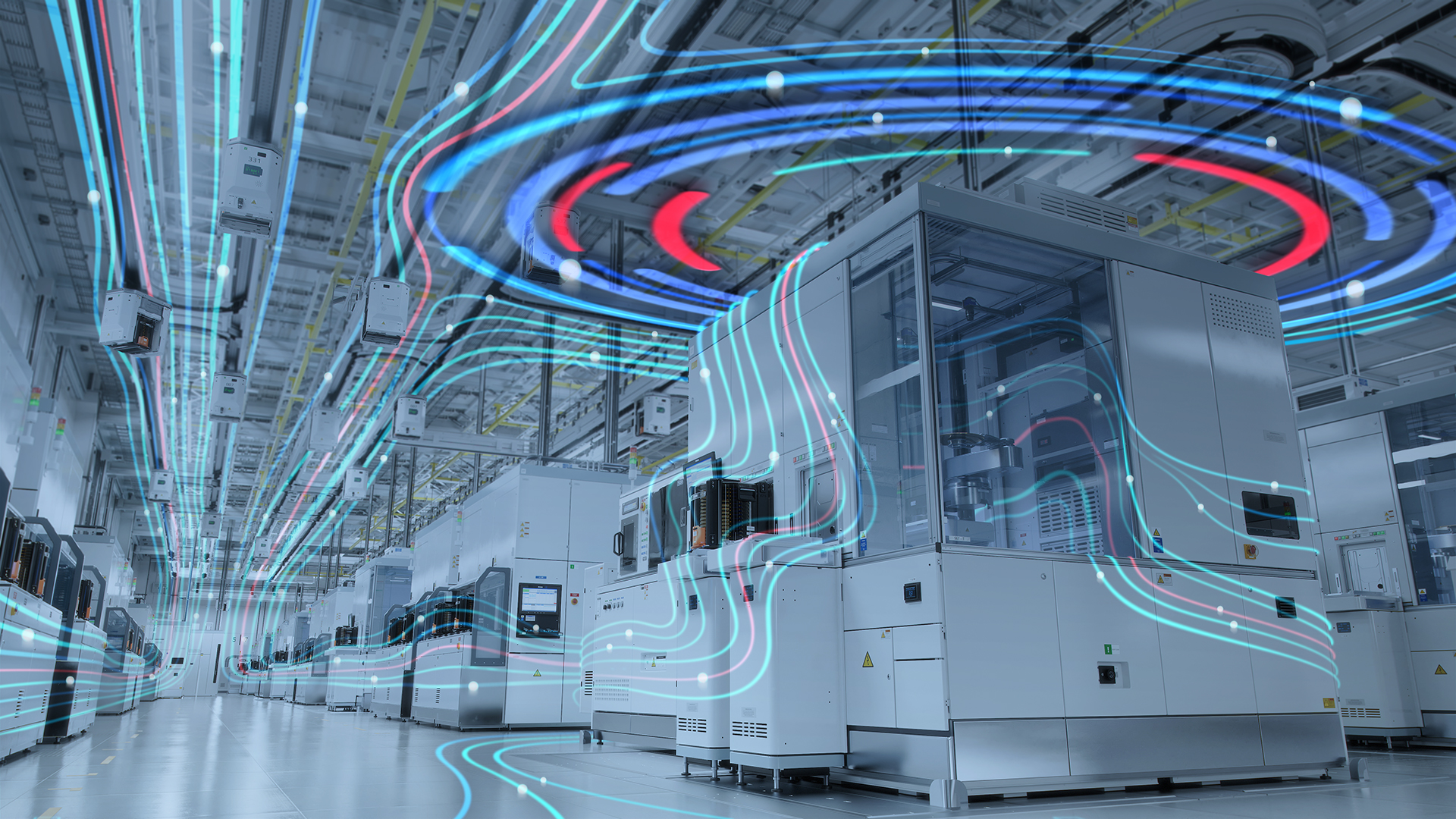
The fusion of MEMS and photonics is not just a theoretical breakthrough. It is reshaping how fabs operate. Manufacturing such hybrid systems demands coordination across multiple areas of expertise. Material scientists, optical engineers, and mechanical designers now collaborate at every stage of production.
This cooperation extends to suppliers and research partners who contribute specialized knowledge and expertise. The fab has become a collaborative studio rather than a competitive silo. Each discovery informs the next, transforming fabrication into an ecosystem of shared invention. In this environment, the line between mechanical and optical design blurs, giving way to a single pursuit of harmony between structure and signal.
Expanding the Toolkit
The rise of MEMS and photonics reinforces that progress depends on a diversity of approaches. No single technology can carry the future alone. Erik Hosler notes, “The solution to keeping Moore’s Law going may entail incorporating photonics, MEMS, and other new technologies into the toolkit.”
His observation reflects how innovation thrives when boundaries dissolve. The era of narrow specialization is giving way to an era of shared problem solving, where engineers borrow freely from multiple fields. This new toolkit offers more than survival beyond Moore’s Law. It offers renewal, a chance to build technologies that feel connected rather than constrained.
Engineers as Collaborators
The success of this integration depends on people who think across disciplines. Engineers now act as mediators between physics and design, between optics and motion. Their task is not only to make things smaller or faster but to make them coexist gracefully.
That responsibility requires humility and curiosity. Each breakthrough depends on learning the language of another field and translating it into actionable design. The best engineers no longer define themselves by a single expertise. They thrive in the intersections where discovery often begins.
From Scaling to Sensibility
The industry once measured progress by geometry, smaller nodes, finer lines, and tighter tolerances. That mindset is fading. The new measure is sensibility, how intelligently a chip interacts with its world.
MEMS provide sensitivity to movement and the environment. Photonics brings awareness of light and energy.
Combined, they create systems that perceive as much as they compute. Instead of focusing on how many transistors fit on a wafer, engineers now ask how gracefully those transistors respond to context. This change marks a shift from dominance over matter to collaboration with it.
Light and Motion as Design Principles
What began as an experiment in integration has become a philosophy of design. MEMS and photonics demonstrate that progress does not depend on a single direction but on convergence. Mechanical and optical now inform one another’s future, blending tangibility with speed, precision with fluidity.
This philosophy carries lessons beyond semiconductors. It suggests that the most enduring innovations come from a balance between structure and energy, between control and creativity. The chip of tomorrow does not just process information. It interprets the world around it through motion and light.
The Quiet Revolution Beneath the Surface
Every leap in technology begins with a change in perception. Engineers are no longer chasing smaller numbers. They are learning to combine forces that once stood apart. MEMS and photonics represent this development not as a passing trend but as a lasting transformation.
Their integration preserves the essence of Moore’s Law, not through reduction but through connection. Progress now thrives in the spaces between ideas, in the collaboration of disciplines that once seemed incompatible. The revolution, as always, begins quietly in the invisible dance of light and motion that defines the future of design.
