


What is the cloud? Where is the cloud? What does the cloud actually do?
These are all questions you’ve likely heard or even asked yourself. In fact, you’re probably using the cloud right now, even if you don’t realize it. If you’ve ever edited a document, sent an email, streamed a television show or listened to music, it was likely made possible by cloud computing. Over the past decade, more and more technology has been moved to the cloud, and a wide variety of businesses have embraced its many functions. Oracle CEO Mark Hurd has gone so far as to describe the cloud as an “inevitable destination” for both businesses and consumers.
However, too many people, cloud computing can be a confusing subject. It’s ingrained in many of our daily routines, yet many struggle to define what the cloud actually is. We’ve created a beginner’s guide to simplify the fundamentals of cloud computing.
What is cloud computing?

The “cloud” in cloud computing originates from network diagrams that depict the internet as a fluffy cloud. Though the notion of computing over a network dates back to the 1960s, the first use of the term “cloud computing” is credited to former Google CEO Eric Schmidt in 2006, who stated that data services and architecture should be on “a cloud somewhere.” When this statement was made over a decade ago it seemed like a visionary ambition, but cloud computing has since gained steady momentum. The global cloud computing market grew by over 24 percent in 2017, valuing it at more than $180 billion.
To put it simply, the cloud is a network of software and services that run on the internet instead of locally on a computer. Cloud computing allows users to access programs and data from anywhere with an internet connection, since the applications are hosted by an outside party. This means that cloud users don’t have to worry about storage or power, and can simply revel in its convenience.
Most cloud computing services fall into one of three general categories: Software as a Service (SaaS), Platform as a Service (PaaS) or Infrastructure as a Service (IaaS). These are sometimes referred to as the cloud computing stack, because they build on top of one another. These three options describe the tasks and responsibilities the service provider offers to its users.
Software as a service

SaaS is a method of delivering centrally-hosted software applications over the internet. SaaS applications are sometimes called web-based software, on-demand software or hosted software, but it always runs on a SaaS provider’s servers. Instead of users having to download, install and maintain software, SaaS can be accessed via the internet, which frees users from complex software and hardware management. With SaaS, cloud providers manage the software in an underlying infrastructure and handle any necessary maintenance. Users can connect to SaaS in any web browser on desktop, mobile devices or tablets.
Platform as a service
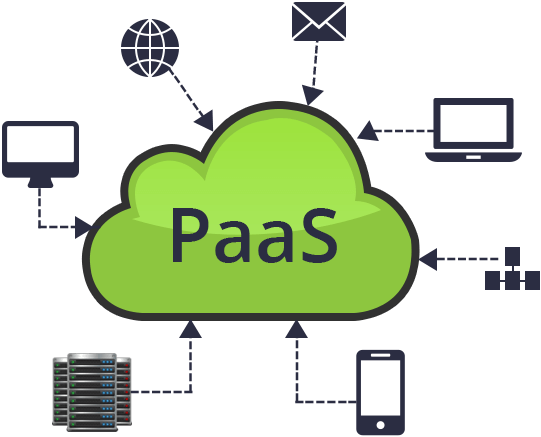
PaaS allows users to develop, run and manage applications, encompassing everything required to support the lifecycle of building and delivering web-based (cloud) applications. PaaS services supply an on-demand environment for developing, testing, delivering and managing software applications. PaaS is designed with developers in mind to ensure that they can quickly create web or mobile apps, without having to manage an infrastructure of servers, storage, network and databases.
Infrastructure as a service

IaaS is hosted by a third party and provides companies with computing resources such as servers, networking, storage and data center space. IaaS services are offered on a pay-per-use basis and help users avoid the expense and complexity of purchasing and managing physical data centers.
Public vs. private

Not all clouds are the same. There are two methods to deploy cloud computing services: public cloud and private cloud. Cloud deployment refers to the type of cloud computing architecture on which the cloud solution (SaaS, PaaS or IaaS) will be implemented. Though public and private clouds are similar in principle, the major difference between them lies in their accessibility.
Public cloud

Public clouds are owned and operated by a third-party service provider. These companies deliver their computing resources, like servers and storage, over the internet. Customers who utilize public clouds have rapid access to affordable cloud services and don’t need to purchase hardware, software or supporting infrastructure. They’re mostly used by private individuals who are less likely to require the level of security offered by private clouds. However, enterprises may use public clouds to encourage the efficient storage of non-sensitive content, online document collaboration and webmail. The most common examples of cloud computing typically fall into the public cloud model and include cloud storage services, online software and website hosting.
Private cloud

Private clouds refer to the infrastructure used exclusively by one business or organization. Private clouds can be managed by a third-party, but they can also be physically located at the company’s onsite data center. The services of a private cloud are maintained on a private network, which is accessed solely by the company. Private clouds offer the many benefits of public clouds with the additional control and customization provided by the on-premise infrastructure. Unlike public clouds, the owning company is responsible for the costs and management of the private cloud, so staffing, management and maintenance are required.
The future of cloud computing

Cloud computing is an integral component in the majority of today’s technology and impacts the way we relate to products and services, customer care and each other. The future of cloud computing is expected to shape our lives over the next decade and beyond and will open the world to new jobs, services, platforms, applications and more. As only 55 percent of organizations currently use the cloud, it can be expected that adoption and integration of the cloud will be maximized in the coming years. Like its current use, the future of the cloud won’t be defined by a single-use case; it will be shaped by developments in emerging technologies like blockchain and artificial intelligence.
The cloud is good for much more than just storing your data — it’s fueling research for all types of new innovation. From creating a bring your own device (BYOD) work environment to curing cancer, the cloud is changing our society every day.
