

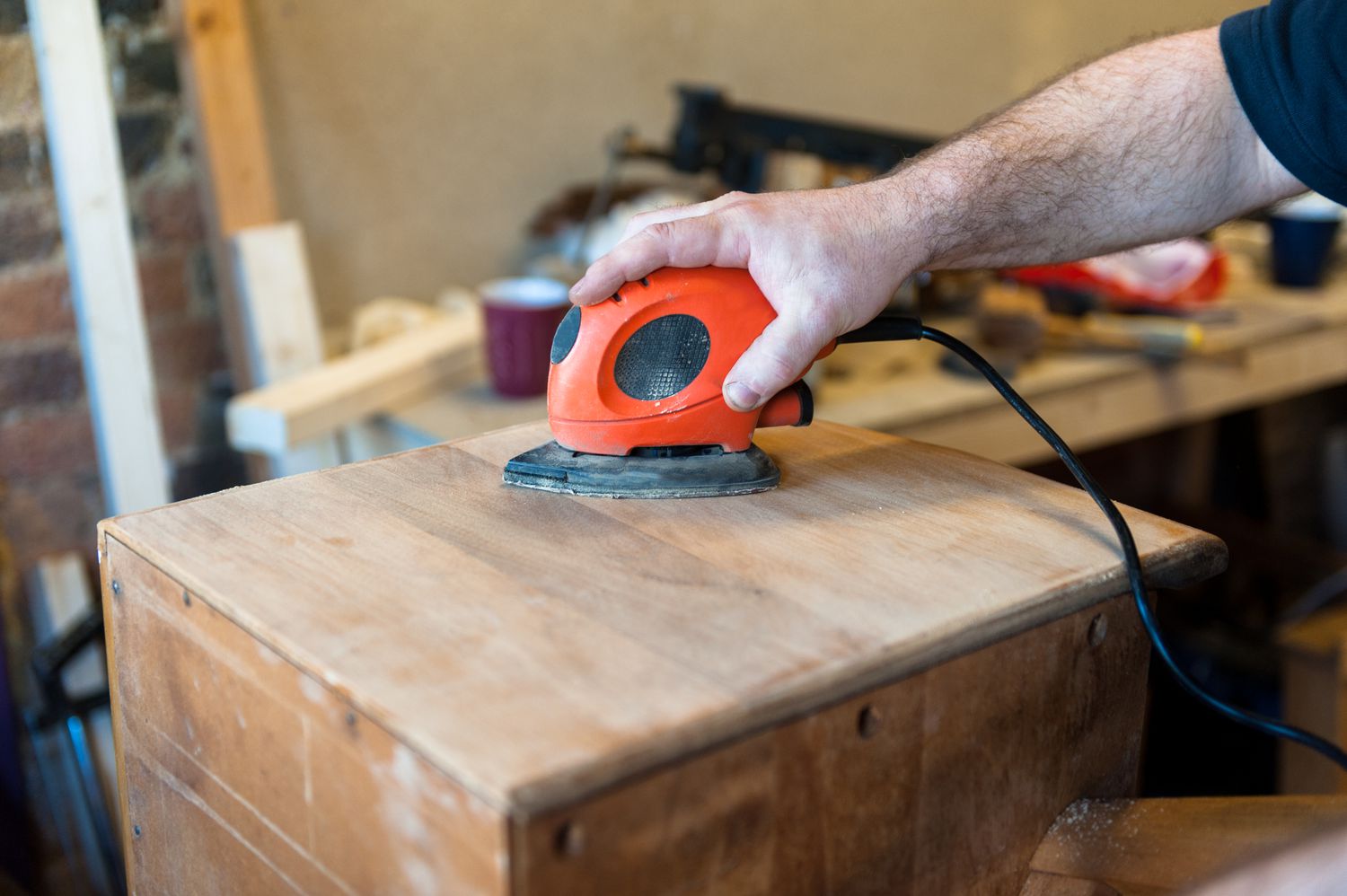
Home improvement projects that involve any kind of painted or finished surface — interior trim and mouldings, stair components, window frames, built-in shelving, door frames and panels — all have detail sanding requirements that determine the quality of the finished result. Getting a smooth, consistent surface into the corners and profiles of these elements is the difference between a renovation that looks professionally executed and one that reveals its DIY origins under close inspection.
Most homeowners who tackle these projects discover the limitation of their tools at the detail sanding stage. The large orbital sander that makes short work of a floor or a tabletop becomes useless the moment the work moves to a chair rail or a window sash. The choice at that point is between hand sanding and a powered detail tool — and the quality and speed differential between the two options is significant.
Understanding Detail Sander Specifications
Detail sanders are described by their orbital speed, their pad size, and their power consumption. Orbital speed — measured in orbits per minute — determines how aggressively the tool removes material at a given grit. Higher speeds cut faster but can leave more visible marks if the grit is coarser than the surface preparation requires. Variable speed control allows the tool to be matched to the task — lower speeds for fine finishing on delicate surfaces, higher speeds for initial removal work.
The NeoSander incorporates variable speed functionality that makes it genuinely versatile across the different phases of a surface preparation sequence, rather than being optimised only for a narrow range of applications. This versatility matters particularly for home improvement use where a single tool needs to handle a wide variety of materials and surface conditions.
Trim and Moulding Work
Interior trim — baseboards, chair rails, crown mouldings, and door and window casings — is one of the highest-visibility elements of any room interior, and its condition significantly affects how finished a space looks. Preparing trim for repainting involves removing gloss from the existing finish, smoothing any chips or damage, and creating a surface that the new paint will adhere to consistently.
A HoZo detail sander handles this work efficiently, getting into the cove and bead profiles of mouldings that a flat sander cannot reach. The triangular pad follows the moulding profile closely enough to produce consistent surface preparation across the full width of the trim — something that is difficult to achieve with hand sanding, particularly on ornate profiles that vary in their cross-section.
Stair Renovation Applications
Stair renovation is one of the most rewarding but most demanding detail sanding challenges in any home improvement project. Spindles, newel posts, handrail profiles, and the areas where treads and risers meet all require careful detail work to look properly finished. The repetitive nature of spindle work — where the same profile is sanded on each of a dozen or more identical spindles — makes consistency between elements particularly important.
A quality detail sander maintains consistent results across repeated applications, producing the same surface quality on the last spindle as on the first. This consistency is what makes the finished stair look intentional rather than irregular, and it is very difficult to achieve through hand sanding alone when working across a full flight of stairs.
Cabinet Repainting and Refinishing
Kitchen and bathroom cabinet repainting has become one of the most popular home improvement projects for good reason — the transformation in a room’s appearance is dramatic and the cost is significantly less than full cabinet replacement. The preparation work, however, determines whether the result looks like a professional refinish or a rushed paint job.
The detail areas on cabinet doors — the recessed panels, the frame profiles, and the corners where frame members meet — require careful preparation for the paint to adhere and look consistent. A detail sander reaches these areas reliably and produces the surface quality that quality cabinet paint needs to perform at its best.
