

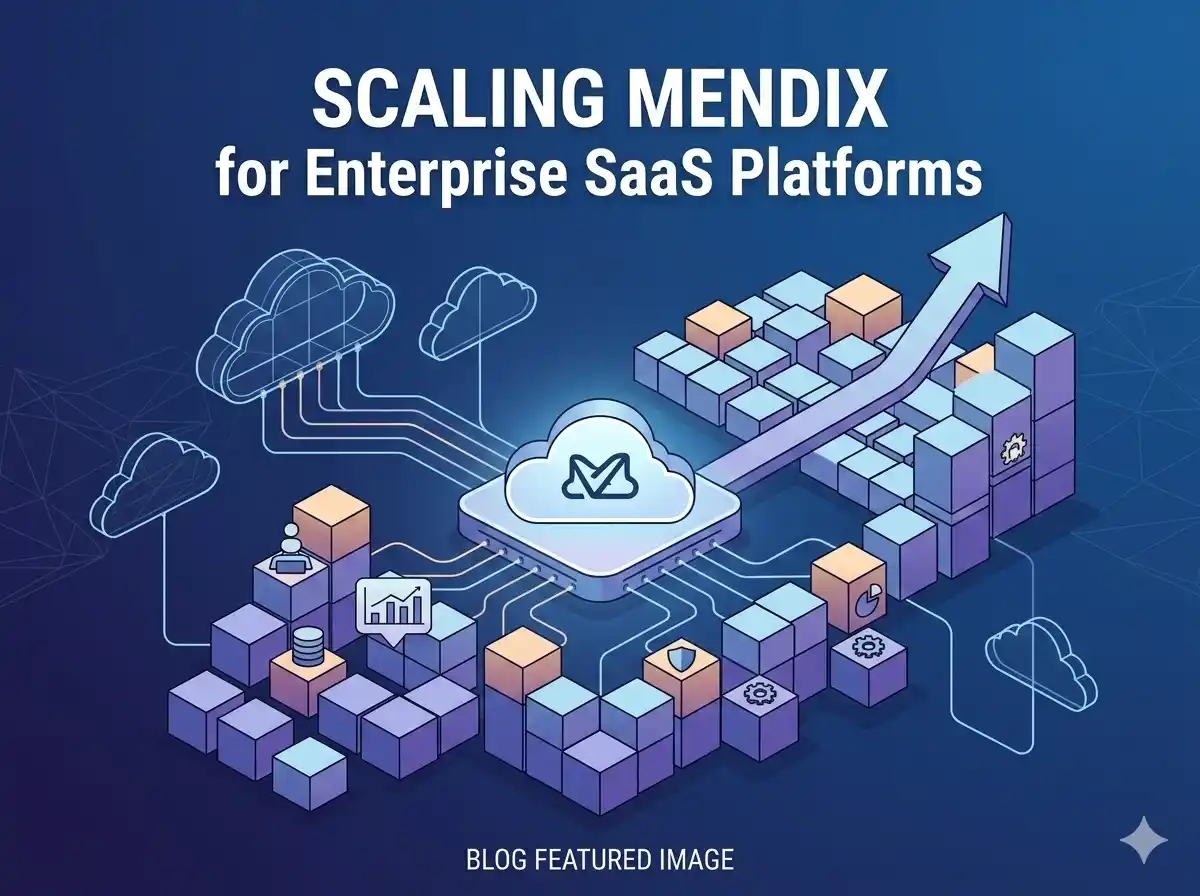
Software-as-a-Service has fundamentally changed how enterprises deliver digital capabilities. Instead of building isolated applications for internal teams, organizations increasingly create platforms designed to serve thousands — sometimes millions — of users across multiple tenants, geographies, and compliance environments.
However, building SaaS platforms introduces architectural demands that traditional enterprise applications rarely encounter. Scalability, tenant isolation, performance stability, and continuous deployment pipelines become core engineering concerns.
For enterprises adopting low-code platforms, the question is no longer whether SaaS solutions can be built quickly. The real question is whether those solutions can scale predictably under enterprise-level demand.
Mendix has increasingly emerged as a viable platform for developing and scaling SaaS applications when supported by disciplined architecture and governance.
The Architectural Difference Between Applications and SaaS Platforms
Many enterprise applications operate within controlled environments. User counts are predictable, workloads are relatively stable, and infrastructure demands remain consistent.
SaaS platforms behave differently.
They must support:
- Rapid user growth
- Dynamic workload spikes
- Multi-tenant data isolation
- Continuous feature deployment
- Global accessibility
Architectures designed for internal systems often struggle when exposed to SaaS-scale usage patterns. Scaling Mendix effectively for SaaS environments requires a deliberate shift toward modular, cloud-native architecture.
Designing Multi-Tenant Architectures
Multi-tenancy is the foundation of any SaaS platform. However, implementing tenant isolation while maintaining operational efficiency is not trivial.
Enterprises must determine whether to adopt:
- Shared database with tenant identifiers
- Separate databases per tenant
- Hybrid tenant segmentation
Each model introduces different trade-offs in terms of performance, security, and operational complexity.
Mendix supports flexible tenant architecture patterns, allowing organizations to align infrastructure decisions with regulatory requirements and growth projections. The key is designing tenant boundaries early in the architecture phase rather than retrofitting them after adoption scales.
Performance Engineering for SaaS Workloads
Enterprise SaaS environments introduce unpredictable usage patterns. Sudden onboarding of new customers or usage spikes during business-critical operations can quickly stress application infrastructure.
To maintain stability, Mendix SaaS architectures must prioritize:
- Stateless application services
- Horizontal scaling capabilities
- Intelligent caching strategies
- Asynchronous processing for heavy workloads
- Efficient database query patterns
Performance engineering should not be reactive. Instead, it must be embedded within the architectural blueprint from the beginning.
Organizations offering Mendix SaaS development often design infrastructure with containerized deployment models to enable dynamic scaling without service disruption.
API-Centric Platform Design
Enterprise SaaS platforms rarely operate in isolation. Customers expect seamless integration with their existing systems, including ERP platforms, CRMs, identity providers, analytics tools, and workflow engines.
API-first design becomes essential.
A well-architected Mendix SaaS platform exposes functionality through structured APIs that allow external systems to interact securely and efficiently.
Benefits of API-centric architecture include:
- Simplified integration with customer ecosystems
- Decoupled service modules
- Reduced dependency between internal components
- Greater flexibility in evolving platform capabilities
Over time, APIs become the connective tissue that allows SaaS platforms to expand without architectural rigidity.
Infrastructure Strategies for SaaS Scalability
Infrastructure design plays a major role in SaaS scalability. Enterprises deploying Mendix SaaS platforms typically rely on containerized environments orchestrated through modern cloud infrastructure.
Key infrastructure considerations include:
- Container orchestration for elastic scaling
- Multi-region deployment for latency optimization
- Automated infrastructure provisioning
- Resilient load balancing
- Failover and disaster recovery planning
Infrastructure must adapt dynamically to user growth without introducing manual intervention.
This approach ensures SaaS platforms remain stable even during periods of rapid adoption.
Governance and Platform Stability
Rapid SaaS expansion can introduce governance challenges.
As new features are added and integrations expand, enterprises must maintain:
- Consistent deployment pipelines
- Strict version control
- Secure access management
- Observability across environments
- Controlled release management
Without structured governance, SaaS platforms risk accumulating technical debt that eventually limits scalability.
Strategic low code consulting services help organizations define governance frameworks that ensure platform stability as adoption grows.
Governance is not a barrier to innovation. It is what enables sustainable scaling.
Observability and Operational Intelligence
SaaS platforms operate continuously across multiple environments. Performance monitoring and operational visibility therefore become critical.
Enterprises must establish:
- Real-time monitoring dashboards
- Transaction tracing across services
- Automated alerting mechanisms
- Centralized log aggregation
- Usage analytics for capacity planning
Observability allows engineering teams to anticipate infrastructure needs before performance degradation occurs.
In SaaS environments, proactive monitoring is often the difference between stable growth and service interruptions.
Continuous Delivery and SaaS Innovation
One of the defining characteristics of SaaS platforms is continuous evolution. Customers expect regular improvements without operational disruption.
Mendix supports modern DevOps pipelines that enable:
- Automated testing workflows
- Staged deployment environments
- Continuous integration pipelines
- Incremental feature releases
This delivery model allows SaaS providers to innovate rapidly while maintaining platform stability.
Continuous deployment pipelines also reduce risk by ensuring changes are validated before reaching production environments.
Strategic Benefits of SaaS Platforms Built with Mendix
When supported by strong architecture and governance, Mendix enables enterprises to build SaaS platforms that deliver significant strategic advantages.
These include:
- Faster feature iteration cycles
- Lower development overhead compared to traditional coding models
- Rapid adaptation to market requirements
- Scalable infrastructure aligned with cloud-native principles
However, these advantages only emerge when organizations approach SaaS architecture with discipline and long-term planning.
Low-code platforms accelerate development, but scaling requires architectural maturity.
Conclusion
Scaling Mendix for enterprise SaaS platforms requires more than rapid application development. It requires thoughtful architecture, disciplined governance, and infrastructure strategies designed for unpredictable growth.
Enterprises that succeed in this space focus on modular design, API-driven integration, observability, and automated deployment pipelines. By aligning these principles with scalable cloud infrastructure, organizations can deliver SaaS platforms capable of evolving alongside their customers.
Teams such as We LowCode work with enterprises to design Mendix architectures that support multi-tenant SaaS platforms while maintaining performance stability, governance consistency, and long-term scalability.
