

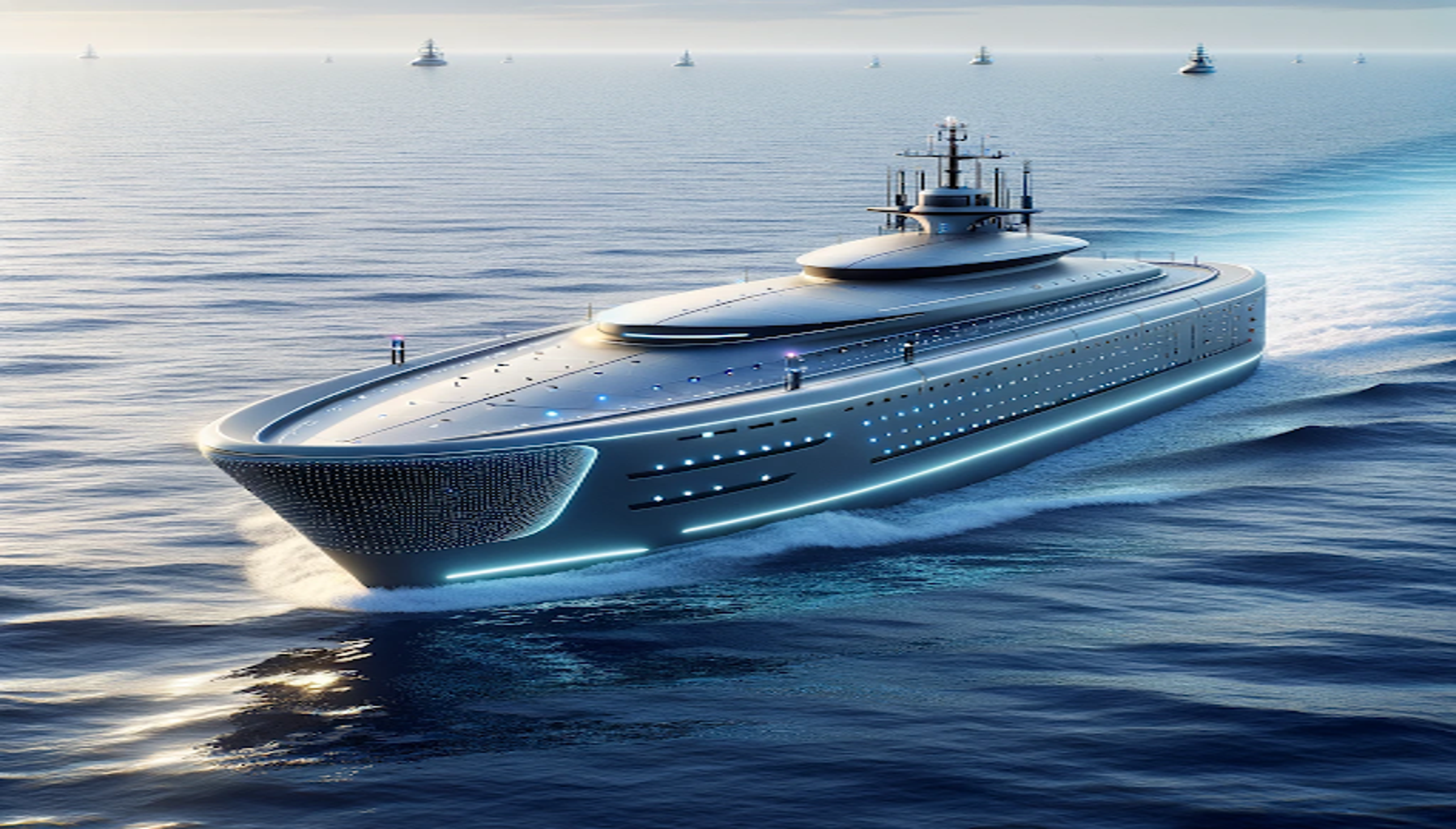
Human civilization has always been closely connected to the sea. For centuries, ships have enabled exploration, trade, cultural exchange, and global economic growth. Yet the vessels sailing across oceans today look dramatically different from those used even a century ago. The transformation from wooden sailing ships to digitally controlled autonomous vessels represents one of the most remarkable engineering evolutions in history.
At the heart of this transformation lies ship design, a discipline that blends physics, engineering, navigation science, and increasingly advanced technology. Ship design has evolved continuously as engineers adapted vessels to new propulsion systems, materials, safety requirements, and operational demands. What began as handcrafted wooden hulls guided by wind power has gradually become a sophisticated field supported by advanced simulations, automated systems, and intelligent navigation technologies.
Understanding the evolution of ship design helps explain how maritime engineering reached its current level of sophistication. By tracing the journey from 19th-century sailing ships to modern autonomous vessels, we can see how technological innovation, industrial progress, and scientific discovery reshaped the ships that move the world’s commerce.
The Age of Sail: Foundations of Early Ship Design
During the 19th century, sailing ships dominated global transportation. These vessels relied entirely on wind power, which meant ship design focused heavily on aerodynamics and sail efficiency. Naval architects and shipbuilders refined hull shapes to improve speed and stability while maximizing cargo capacity.
Wood remained the primary construction material, and shipbuilding relied heavily on craftsmanship and traditional knowledge passed down through generations. While mathematical calculations existed, much of ship design during this era depended on experience and observation.
Sailing ships such as clippers became famous for their speed and elegance. Their long, narrow hulls and tall masts allowed them to travel quickly across long distances, carrying valuable cargo like tea, spices, and textiles. Designers carefully balanced hull shape, sail configuration, and structural strength to create vessels capable of surviving long ocean voyages.
Although these ships were remarkable achievements for their time, they had limitations. Dependence on wind made travel unpredictable, and cargo schedules often varied significantly depending on weather conditions. These limitations eventually encouraged engineers to explore alternative propulsion methods.
The Steam Revolution and the Transformation of Ship Design
The introduction of steam power in the mid-19th century marked a turning point in ship design. Steam engines allowed ships to move independently of wind, providing more predictable travel schedules and greater control over navigation.
This technological shift dramatically changed how naval architects approached ship design. Hull shapes no longer needed to prioritize sail performance, allowing engineers to optimize vessels for engine-driven propulsion.
Iron and later steel began replacing wood as primary construction materials. These stronger materials enabled larger ships with greater cargo capacity and improved structural durability. Iron hulls also allowed designers to experiment with new structural frameworks that increased strength while reducing weight.
Steamships introduced new design considerations such as engine placement, fuel storage, and propeller efficiency. Engineers had to carefully integrate these components while maintaining proper balance and stability.
By the late 19th century, steam-powered vessels had largely replaced sailing ships in commercial shipping routes. The transition demonstrated how technological innovation could rapidly reshape ship design and maritime operations.
Steel Ships and the Rise of Industrial Shipbuilding
As the industrial revolution progressed, steel became the dominant material in ship design. Steel offered exceptional strength, durability, and resistance to harsh marine environments, making it ideal for large vessels.
The adoption of steel allowed naval architects to design significantly larger ships capable of carrying more cargo and passengers. Shipyards also benefited from industrial manufacturing techniques that enabled more standardized and efficient production.
During this period, ship design became increasingly scientific. Engineers began using mathematical models and experimental testing to evaluate hull performance and structural integrity. The field of naval architecture developed formal methods for calculating buoyancy, stability, and hydrodynamic resistance.
Large passenger liners and cargo vessels emerged as symbols of technological progress. These ships featured multiple decks, improved safety systems, and more powerful propulsion engines.
The early 20th century also saw the introduction of diesel engines, which offered greater fuel efficiency and reliability compared to steam engines. Diesel propulsion quickly became the dominant system for many types of vessels and remains widely used today.
Modern Ship Design and the Role of Hydrodynamics
As shipbuilding technology advanced, naval architects began focusing more deeply on hydrodynamic performance. Understanding how water flows around a vessel became essential for improving efficiency and reducing fuel consumption.
Hydrodynamics studies the interaction between a moving ship and the surrounding water. Designers analyze resistance, wave formation, and turbulence to create hull shapes that minimize drag and maximize propulsion efficiency.
Ship design during the late 20th century increasingly relied on scale model testing and computational analysis. Engineers used specialized facilities to observe how model ships behaved in controlled water tanks, allowing them to refine hull forms before full-scale construction.
These advances helped create modern cargo ships, tankers, and container vessels capable of transporting massive loads while maintaining operational efficiency.
Hydrodynamic research continues to influence ship design today, particularly as shipping companies seek ways to reduce fuel consumption and environmental impact.
Digital Engineering and the Transformation of Naval Architecture
The digital revolution introduced powerful tools that fundamentally changed how ships are designed. Computer-aided design software allowed engineers to create detailed three-dimensional models of vessels and analyze their performance under various conditions.
These digital tools made it possible to simulate water flow, structural stress, and stability scenarios without building physical prototypes. Engineers could test multiple design variations quickly and optimize performance before construction began.
Computational fluid dynamics became especially valuable in modern ship design. This technology enables naval architects to visualize how water moves around the hull, helping them identify areas where resistance can be reduced.
Digital modeling also supports structural analysis, ensuring that vessels can withstand wave forces, cargo loads, and long-term fatigue stresses.
By combining traditional naval architecture principles with advanced computer simulations, modern ship design has become far more precise and efficient than ever before.
The Emergence of Autonomous Ships
One of the most exciting developments in modern maritime engineering is the emergence of autonomous vessels. These ships rely on advanced sensors, navigation algorithms, and artificial intelligence to operate with minimal or no human intervention.
Autonomous ship design represents a significant departure from traditional maritime engineering. Designers must integrate complex digital systems that monitor the environment, detect obstacles, and adjust navigation routes in real time.
Sensors such as radar, satellite positioning systems, cameras, and lidar provide continuous information about surrounding conditions. Artificial intelligence systems analyze this data and make navigation decisions based on predefined safety protocols.
Autonomous vessels have the potential to improve operational efficiency, reduce human error, and enhance maritime safety. However, their development also raises important questions related to regulation, cybersecurity, and international maritime law.
Although fully autonomous ocean-going ships are still in development, several experimental vessels have already demonstrated the feasibility of this technology.
Sustainability and the Next Generation of Ship Design
In addition to autonomy, modern ship design increasingly focuses on sustainability. Environmental regulations and climate concerns are driving the development of cleaner propulsion systems and more energy-efficient vessels.
Naval architects are exploring alternative fuels such as hydrogen, ammonia, and battery-electric propulsion. These technologies aim to reduce greenhouse gas emissions and minimize environmental impact.
Energy-efficient hull shapes, advanced coatings that reduce water resistance, and hybrid propulsion systems are also becoming common features in new ship designs.
The integration of digital monitoring systems allows operators to track fuel consumption and optimize ship performance during voyages.
Sustainability is likely to remain a major influence on ship design as the maritime industry works toward long-term environmental goals.
The Continuing Evolution of Ship Design
Ship design has never remained static. Each technological advancement builds upon previous knowledge while introducing new possibilities for innovation.
From wooden sailing vessels to steel cargo ships and now to autonomous maritime systems, ship design reflects humanity’s ability to adapt engineering solutions to changing economic, technological, and environmental challenges.
Modern naval architects must combine traditional maritime knowledge with expertise in digital technologies, environmental science, and advanced materials engineering.
The future of ship design will likely involve even greater integration of automation, artificial intelligence, and sustainable energy solutions.
Frequently Asked Questions About Ship Design
What is ship design?
Ship design is the engineering process of creating vessels that can safely operate in water. It involves developing hull shapes, calculating buoyancy and stability, designing propulsion systems, and ensuring structural integrity.
How did sailing ships influence modern ship design?
Sailing ships established many of the fundamental principles of naval architecture, including hull shaping, stability calculations, and weight distribution. These principles continue to influence modern ship design.
Why did steam power change ship design?
Steam engines allowed ships to move independently of wind, which changed how hulls were shaped and how propulsion systems were integrated into vessels.
What role does computer technology play in ship design today?
Computer modeling and simulation allow engineers to analyze hydrodynamics, structural strength, and stability before construction begins, improving efficiency and safety.
What are autonomous ships?
Autonomous ships are vessels equipped with advanced sensors and artificial intelligence systems that allow them to navigate with minimal human intervention.
Will autonomous ships replace traditional vessels?
Autonomous technology is likely to complement rather than completely replace traditional ships. Many vessels may operate with reduced crew sizes while still maintaining human oversight.
Conclusion: From Wind-Powered Ships to Intelligent Vessels
The story of ship design reflects centuries of innovation, adaptation, and engineering progress. Beginning with handcrafted wooden sailing ships driven by wind, maritime technology gradually evolved through the introduction of steam engines, steel construction, and diesel propulsion systems.
Each stage of development introduced new possibilities while reshaping how naval architects approached vessel design. Hydrodynamic research improved efficiency, industrial manufacturing enabled larger ships, and digital modeling transformed how engineers analyze performance.
Today, ship design is entering another transformative era with the rise of autonomous vessels, advanced digital systems, and sustainable propulsion technologies. These innovations are redefining how ships operate while maintaining the core principles of stability, buoyancy, and structural strength that have guided naval architecture for generations.
The evolution of ship design demonstrates how engineering continues to respond to changing global needs. As technology advances and environmental priorities grow, future ships will likely become smarter, cleaner, and more efficient than ever before.
From the elegant sailing vessels of the 19th century to the intelligent ships of the modern era, the journey of ship design remains a powerful example of human ingenuity navigating the vast possibilities of the ocean.
