

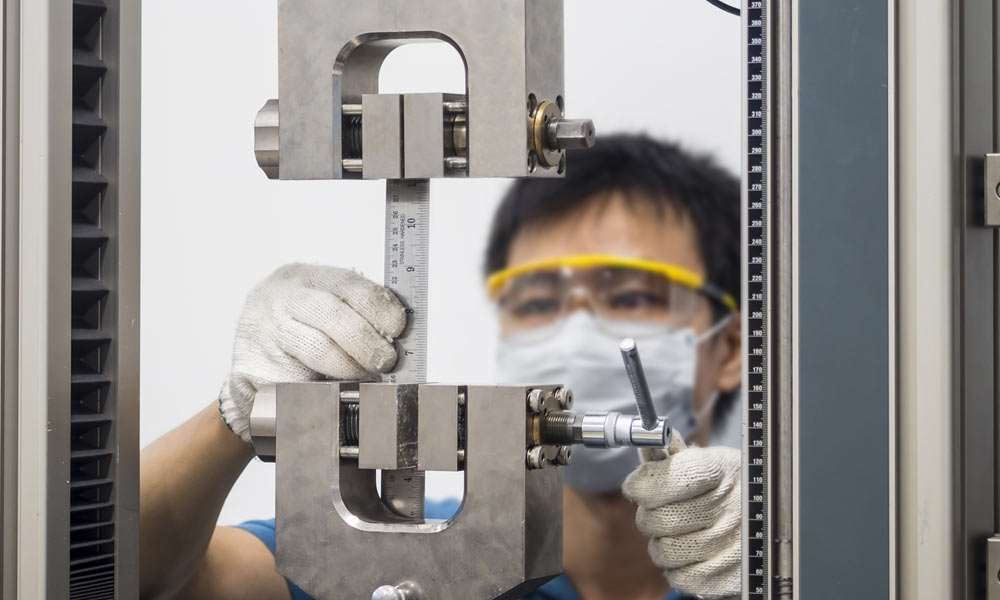
Every structure, machine, and engineered product depends on materials performing reliably under stress. From aircraft wings and automotive components to bridges and industrial machinery, materials are constantly exposed to forces that challenge their strength and durability. Understanding how these materials behave under extreme conditions is essential for engineers, manufacturers, and safety regulators. This is where mechanical testing plays a crucial role.
Mechanical testing helps scientists and engineers evaluate how materials respond to forces such as tension, compression, bending, and repeated loading. Among the most important methods used to evaluate durability are fatigue testing and impact testing. These techniques simulate the conditions materials encounter in real-world environments and reveal how they behave when pushed close to their limits.
Fatigue testing studies how materials respond to repeated cycles of stress over time, while impact testing evaluates how materials react to sudden forces or shocks. Together, these approaches provide a deeper understanding of material reliability, helping industries design safer and longer-lasting products.
This article explores fatigue and impact testing in detail, explaining how these methods work, why they matter, and what engineers learn when materials are pushed to their limits.
Understanding the Role of Mechanical Testing in Engineering
Mechanical testing refers to a broad set of experimental methods used to determine the physical properties and performance characteristics of materials under applied forces. These tests allow engineers to measure how materials deform, resist stress, and ultimately fail.
Materials may appear strong under static conditions but behave very differently when exposed to real-world operating environments. A metal component might withstand a large single load but fail after thousands of smaller repeated stresses. Similarly, a material that performs well under gradual loading might fracture instantly when struck by a sudden force.
Mechanical testing provides controlled laboratory conditions that replicate these scenarios. By studying how materials react to stress, engineers gain insight into properties such as strength, ductility, toughness, and durability. This information becomes critical when selecting materials for safety-critical applications like aerospace, automotive systems, construction, and energy infrastructure.
Two particularly revealing methods within this field are fatigue testing and impact testing. Each focuses on different stress conditions, but both reveal how materials behave when pushed beyond everyday limits.
Fatigue Testing: When Small Stresses Become Big Problems
Fatigue failure is one of the most common causes of structural damage in engineering systems. Unlike sudden overload failures, fatigue occurs gradually. It develops when a material experiences repeated cycles of stress over time, even if each individual load is relatively small.
In fatigue testing, a specimen is subjected to controlled cyclic loading. The load may alternate between tension and compression or fluctuate within a specific range. Over thousands or millions of cycles, microscopic cracks begin to form within the material. These cracks slowly grow until the structure ultimately fractures.
What makes fatigue particularly dangerous is that it often occurs without obvious warning signs. A component may appear perfectly intact until a small crack suddenly propagates and leads to catastrophic failure.
Fatigue testing allows engineers to determine how long a material can endure repeated stress before failure occurs. The results often produce a relationship between stress level and number of cycles to failure, commonly referred to as the fatigue life of the material.
This information helps engineers design components with safety margins that account for real-world operating conditions. For example, rotating machine parts, aircraft wings, and suspension systems must endure millions of stress cycles during their service life. Fatigue testing ensures these components can withstand those demands.
Understanding fatigue behavior also guides improvements in manufacturing processes, surface treatments, and material selection. Small changes in surface finish, heat treatment, or alloy composition can significantly influence fatigue resistance.
The Science Behind Fatigue Failure
Fatigue failure develops through a gradual process that begins at the microscopic level. Under repeated stress, tiny imperfections within the material structure act as stress concentration points. Over time, these points develop into microscopic cracks.
As cyclic loading continues, the cracks slowly propagate through the material. Each loading cycle extends the crack slightly further until the remaining material can no longer support the applied stress.
At that moment, the material fractures rapidly, often appearing as a sudden failure even though the damage accumulated gradually over time.
Engineers studying fatigue behavior often analyze fracture surfaces to identify characteristic patterns left by crack growth. These patterns provide valuable information about the stresses that caused the failure and the rate at which the crack propagated.
Through mechanical testing techniques like fatigue testing, engineers can observe these mechanisms in controlled conditions and use the results to predict long-term material performance.
Impact Testing: Measuring Resistance to Sudden Forces
While fatigue testing focuses on repeated stress, impact testing examines how materials behave under sudden loading. This type of mechanical testing evaluates a material’s ability to absorb energy during rapid deformation.
Impact events occur in many real-world situations. Automotive collisions, dropped tools, sudden mechanical failures, and debris strikes all subject materials to high-speed forces. Under these conditions, materials experience extremely rapid loading rates that differ significantly from slow, gradual stresses.
Impact testing replicates these scenarios by striking a material specimen with a controlled force and measuring the energy absorbed before fracture. The result provides insight into the material’s toughness, or its ability to resist brittle failure under sudden stress.
A tough material absorbs energy through plastic deformation before breaking. A brittle material, by contrast, fractures quickly with minimal energy absorption.
This distinction is especially important in environments where sudden impacts are possible. Engineers must ensure that structural materials remain resistant to catastrophic brittle fractures under unexpected loading conditions.
How Impact Testing Reveals Material Toughness
During an impact test, a specimen is typically notched to create a stress concentration point. The specimen is then struck by a pendulum or similar mechanism that delivers a controlled impact.
The energy absorbed during fracture is measured and used to determine the material’s impact resistance. Higher absorbed energy generally indicates greater toughness.
Impact testing also reveals how materials behave at different temperatures. Many materials, especially certain metals, become more brittle at low temperatures. Engineers study this behavior to determine the ductile-to-brittle transition temperature, which marks the point where a material begins to fracture more easily under impact.
Understanding this transition is critical for structures operating in cold environments, such as pipelines, ships, and outdoor infrastructure.
Through careful mechanical testing procedures, engineers can evaluate how materials behave across a range of temperatures and loading conditions.
Why Fatigue and Impact Testing Are Essential for Safety
Engineering failures can have severe consequences, including financial losses, environmental damage, and risks to human life. Fatigue and impact testing help reduce these risks by revealing weaknesses before materials are used in real-world applications.
Fatigue testing ensures components can survive repeated stress cycles over their intended lifespan. Impact testing confirms that materials can withstand sudden forces without fracturing unexpectedly.
Together, these methods provide complementary insights into material behavior. One evaluates long-term durability, while the other examines resistance to rapid energy transfer.
Mechanical testing data is often incorporated into engineering standards, design guidelines, and safety regulations. Industries rely on these insights to determine safe operating limits and develop materials capable of handling demanding environments.
Without these testing methods, predicting material performance under extreme conditions would rely largely on guesswork.
Advances in Mechanical Testing Technologies
Modern mechanical testing continues to evolve as engineering challenges grow more complex. Advances in digital sensors, high-speed cameras, and computer modeling have significantly improved the precision and depth of testing results.
Researchers now use advanced imaging techniques to observe crack growth in real time during fatigue experiments. High-speed impact testing systems can capture detailed information about deformation and fracture mechanisms within milliseconds.
Computer simulations also complement laboratory testing by modeling stress distributions and predicting failure behavior under various conditions. These simulations help engineers interpret mechanical testing data more effectively and design materials with improved performance characteristics.
As new materials such as advanced alloys, composites, and engineered polymers become more common, mechanical testing remains essential for verifying their reliability.
Real-World Applications of Fatigue and Impact Testing
Fatigue and impact testing influence the design of many everyday technologies. In the automotive industry, engineers test suspension components, chassis materials, and safety structures to ensure they perform reliably during years of driving and potential collisions.
In aerospace engineering, fatigue testing is especially critical because aircraft components experience repeated stress cycles during takeoff, flight, and landing. Engineers must ensure that wings, fuselage structures, and landing gear maintain their integrity over long service periods.
Construction materials also undergo rigorous mechanical testing. Bridges, buildings, and infrastructure must withstand environmental stresses, vibrations, and occasional impact events while maintaining structural stability.
Energy systems, including wind turbines and offshore platforms, rely heavily on fatigue testing to ensure components can endure continuous dynamic loading.
Across industries, these testing methods provide the scientific foundation for safer and more durable engineering solutions.
Frequently Asked Questions About Mechanical Testing
What is mechanical testing?
Mechanical testing is the process of evaluating how materials respond to applied forces. It helps determine properties such as strength, toughness, flexibility, and durability. Engineers use this information to ensure materials can perform safely in real-world applications.
What is fatigue testing in materials engineering?
Fatigue testing measures how materials behave under repeated cycles of stress. It determines how many cycles a material can endure before cracks form and eventually lead to failure.
Why is impact testing important?
Impact testing evaluates how well a material absorbs energy during sudden forces or shocks. It helps engineers understand whether a material will deform safely or fracture suddenly during high-speed loading.
What industries rely on mechanical testing?
Mechanical testing is widely used in aerospace, automotive manufacturing, construction, energy production, and industrial machinery development. Any industry that relies on structural materials uses these methods to ensure safety and reliability.
What causes fatigue failure in materials?
Fatigue failure occurs when repeated stress cycles cause microscopic cracks to develop within a material. Over time, these cracks grow until the material can no longer withstand the applied load.
How do engineers improve fatigue resistance?
Engineers improve fatigue resistance by selecting appropriate materials, refining manufacturing processes, enhancing surface finishes, and reducing stress concentration points within component designs.
Conclusion: Understanding Material Limits Through Mechanical Testing
Materials form the backbone of modern engineering, but their true capabilities only become clear when they are tested under demanding conditions. Fatigue and impact testing reveal how materials behave when subjected to repeated stress cycles and sudden forces, providing insights that cannot be obtained through theoretical analysis alone.
Through fatigue testing, engineers learn how long materials can endure cyclic loading before cracks form and propagate. Through impact testing, they understand how materials absorb energy and resist brittle fracture under rapid loading conditions. Together, these methods provide a comprehensive picture of how materials perform when pushed to their limits.
Mechanical testing ultimately supports safer engineering decisions, guiding material selection, design improvements, and manufacturing practices across many industries. As technology continues to evolve and new materials emerge, these testing methods will remain essential tools for understanding the complex behavior of materials under stress.
By uncovering the limits of material performance, fatigue and impact testing help ensure that the structures and systems we rely on every day remain strong, reliable, and safe.
